Ultima vs Triple Whale
Ultima vs Triple Whale: Analytics vs Action
Ultima vs Triple Whale
| Feature | Ultima | Triple Whale |
|---|---|---|
| Pricing | Full-stack growth platform starting at $500/mo (Daniel F at Just Ride LA cut total marketing spend from $8K/mo to $500/mo using Ultima) | $129–$279/mo for analytics dashboards only; execution tools sold separately or not available |
| Landing Page Builder | Built-in AI landing page builder with conversion optimization; Hieu N at Jade Jewelers doubled landing page conversion rates | No landing page builder. Triple Whale is a reporting and attribution tool only |
| Ad Creative Generation | AI-powered ad creative generator produces on-brand static and video ad variants at scale; Tim M at Martin & Pleasance cut creative production time by 80% | No creative generation capabilities; integrates with some creative tools via API but does not generate ads |
| SEO & Content Automation | SEO Autopilot generates and publishes optimized blog posts, collection pages, and product descriptions automatically | No SEO or content features; purely a paid media and attribution analytics platform |
| Analytics & Attribution | Unified analytics command center with conversion tracking, channel attribution, and AI-driven recommendations tied to execution | Best-in-class multi-touch attribution, pixel-based tracking, cohort analysis, and blended ROAS dashboards across paid channels |
| Conversion Optimization | Closes the loop, data insights trigger automated landing page, ad, and content changes to improve conversion | Surfaces conversion data and ROAS metrics but does not take action; optimization is manual and depends on your team |
| AI Capabilities | AI across the full funnel: creative generation, copy writing, SEO publishing, landing page optimization, and strategic recommendations | AI-assisted insights (Moby AI chatbot) for querying data and generating reports; no execution AI |
| Creative Volume & Speed | Generates multiple ad creative variants in minutes; dramatically reduces agency dependency and production cycles | Does not generate creative; creative volume depends entirely on your internal team or external agency |
| Shopify Integration | Native Shopify integration for storefront, product catalog, orders, and conversion data, synced in real time | Shopify integration for revenue and order data attribution; strong e-commerce data sync but no storefront execution |
| Integrations & Ecosystem | Integrates with Meta, Google, TikTok, Shopify, Klaviyo, and major ad platforms; all execution and data in one workspace | Broad integrations across 40+ platforms including Meta, Google, TikTok, Klaviyo, Northbeam, and Gorgias; strong ecosystem for data aggregation |
| Customer Support | Dedicated onboarding with personalized live demos using your actual brand data; hands-on growth support | Email and chat support; higher tiers include dedicated customer success managers; active community and help center |
| Scalability | Built for DTC brands from $500K to $50M+ in revenue; replaces agency stack as brand scales | Scales well for high-spend paid media brands; best suited for brands spending $10K+/mo on paid ads who need attribution clarity |
Our Verdict
**Best for DTC brands who need more than a dashboard:** Ultima is the clear choice for ecommerce brands that want data *and* action in one platform, generating ads, landing pages, and SEO content automatically, not just reporting on what already happened. While Triple Whale excels at attribution clarity for high-spend paid media teams, Ultima closes the entire loop from insight to execution, making it the stronger fit for growing DTC brands that can't afford to maintain a separate agency, creative team, and analytics stack.
Introduction
You're evaluating Ultima vs Triple Whale because you want to grow faster, not just measure growth better. These two platforms serve fundamentally different purposes, and choosing the wrong one means either flying blind on attribution or drowning in data you don't have time to act on. Here's the honest breakdown.
A Note on Transparency
We'll be upfront, we built Ultima, so we have a perspective. But our goal here is to give you an accurate, fair comparison so you can make the right call for your brand. If Triple Whale is a better fit for your situation, we'll tell you that too.
What Is Triple Whale?
Triple Whale is one of the most recognized analytics and attribution platforms in the DTC space, and for good reason. It was built specifically for Shopify brands running paid media at scale, solving a problem that plagued performance marketers for years: unreliable attribution data across Meta, Google, and TikTok after iOS 14 wrecked pixel accuracy. Triple Whale's first-party pixel, combined with its multi-touch attribution models and blended ROAS dashboards, gives brands a much clearer picture of which ads are actually driving revenue.
The platform has grown significantly since launch, adding features like Moby, an AI-powered data chatbot that lets you query your store metrics in plain English, cohort analysis, creative analytics, and a summary dashboard that executives actually want to open. If your primary pain point is "I don't know which of my paid channels is working," Triple Whale is genuinely excellent at answering that question.
Where Triple Whale stops, however, is at the insight layer. It tells you what happened, which campaign drove which purchases, which creative had the best ROAS, but it does not take any action on that information. Your team still has to design the next ad, build the next landing page, brief the next blog post, and interpret every recommendation manually. For brands with lean teams or limited agency budgets, that gap between data and execution is where growth stalls.
What Is Ultima?
Ultima is an AI-powered growth platform built for DTC ecommerce brands that want to close the loop between data and execution. Rather than giving you a dashboard and walking away, Ultima connects your store's performance data directly to the tools that act on it, an AI ad creative generator, a landing page builder, an SEO content autopilot, and a unified analytics command center, all inside one platform with a native Shopify integration.
The platform was purpose-built to replace the fragmented stack most DTC brands cobble together: a separate analytics tool, a creative agency, a landing page tool, an SEO vendor, and a media buyer. Brands like Martin & Pleasance, Jade Jewelers, and Just Ride LA use Ultima to consolidate that stack and move faster. Tim M, at Martin & Pleasance reduced creative production time by 80% using Ultima's ad creative generation. Hieu N, at Jade Jewelers doubled landing page conversion rates after switching to Ultima's built-in page builder and conversion optimization layer.
The core philosophy behind Ultima is that analytics without execution is just expensive reporting. Every insight the platform surfaces, a drop in conversion rate, an underperforming ad set, a gap in organic search, is connected to an action Ultima can help you take immediately, whether that's generating a new ad variant, publishing an optimized landing page, or launching a content cluster to capture organic traffic.
Head-to-Head Comparison
Landing Pages & Storefront
Triple Whale has no landing page builder. It's not a knock on the product, that's simply not what it was designed to do. Triple Whale tracks what happens after someone lands on your page; it doesn't help you build or optimize that page. If your ads are converting poorly, Triple Whale will show you the conversion rate data, but you'll need a separate tool (Replo, Shogun, Zipify, or a developer) to actually fix the problem.
Ultima includes a built-in landing page builder designed specifically for DTC conversion. Pages are generated with AI-driven copy, product-specific layouts, and are directly connected to your Shopify catalog. The system doesn't just build pages, it monitors their performance and surfaces optimization recommendations tied to your actual store data.
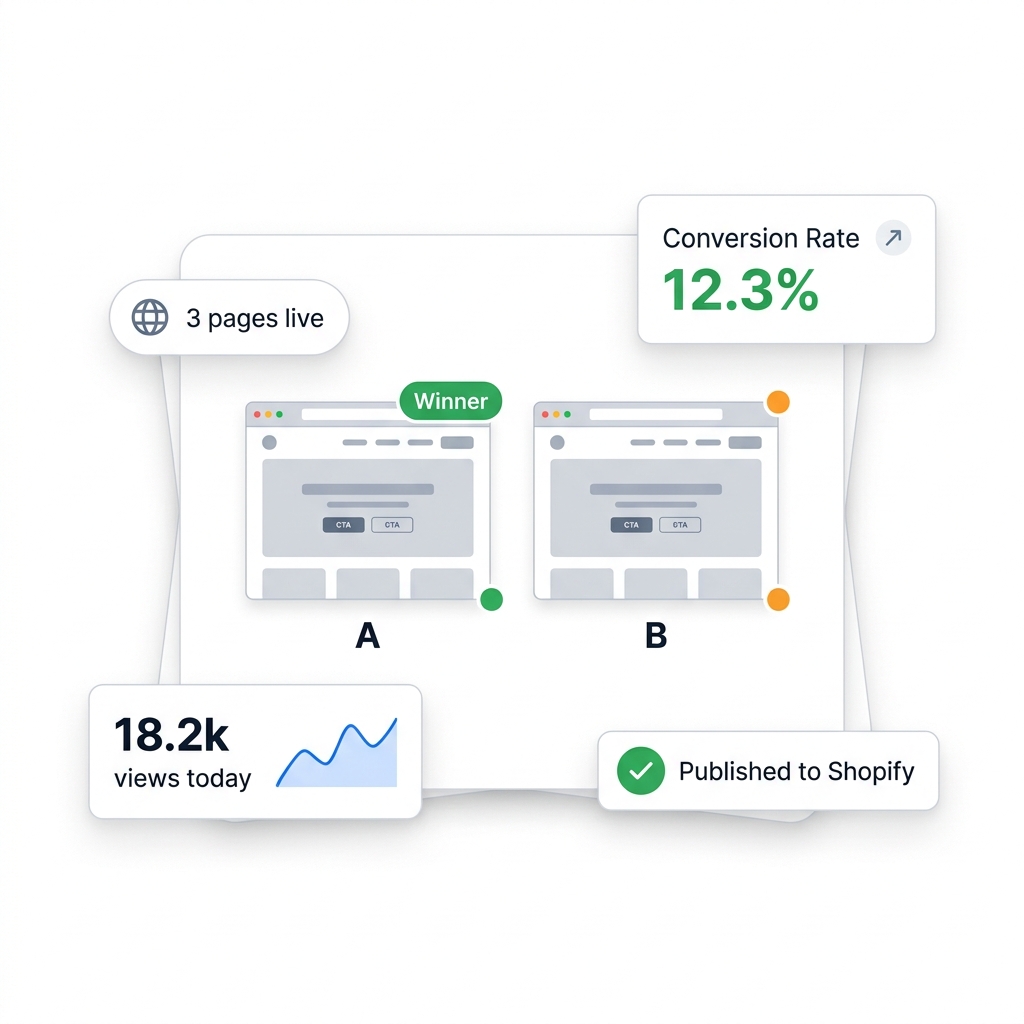
For Hieu N, at Jade Jewelers, the impact of having landing page creation and analytics in the same platform was immediate, removing the back-and-forth between tools and teams meant changes went live faster and the feedback loop between data and execution tightened dramatically.
Ad Creative Generation
This is one of the starkest differences in the Ultima vs Triple Whale comparison. Triple Whale's Creative Cockpit gives you creative analytics, you can see which ad images and videos are driving the best ROAS, compare hooks, and identify fatigue. That's genuinely useful for teams that have a large creative library. But Triple Whale does not generate a single piece of creative. The output is insight; the input still has to come from your team or your agency.
Ultima's AI ad creative generator produces on-brand static ads, video variants, and copy at scale, directly from your product catalog and brand guidelines. You can go from zero to a full set of ad variants in minutes, not days. Tim M, at Martin & Pleasance used this capability to cut creative production time by 80%, significantly reducing agency dependency while increasing the volume of creative being tested.
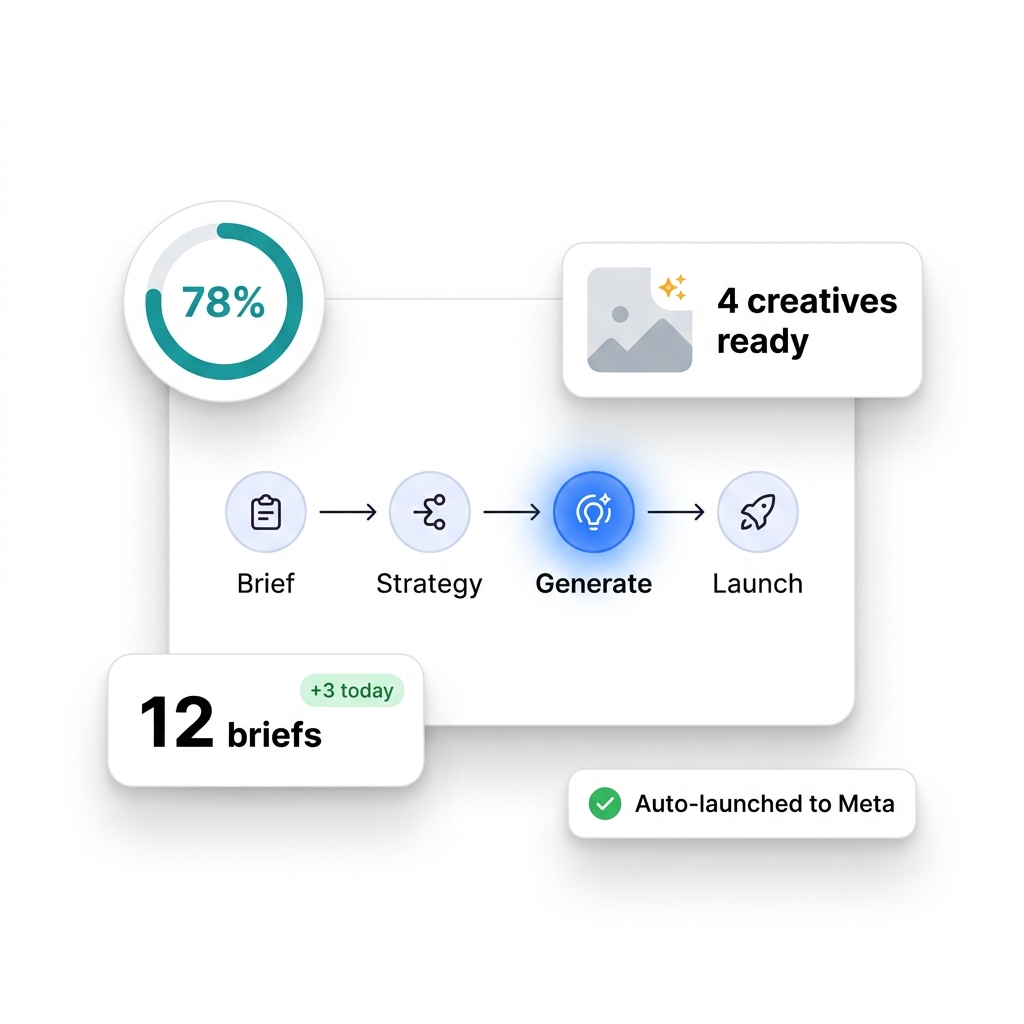
For brands running performance marketing with small teams, the difference between knowing which creatives work best and being able to produce more of them without an agency is the difference between a useful dashboard and actual growth leverage.
SEO & Content
Triple Whale has no SEO or organic content features. It is built entirely around paid media attribution and is the right tool for that job. If organic search is part of your growth strategy, Triple Whale won't help you there.
Ultima's SEO Autopilot generates and publishes optimized blog posts, product descriptions, and collection pages on a schedule, automatically pulling in keyword opportunities and aligning content to what your store's data shows is converting. For DTC brands trying to reduce CAC over time, building an organic acquisition channel alongside paid is one of the highest-leverage moves available, and Ultima automates the execution layer entirely.
This matters especially for brands like Daniel F, at Just Ride LA, who cut total marketing spend from $8,000/month to $500/month by using Ultima to own more of the acquisition funnel organically, instead of relying entirely on paid channels that required constant budget to maintain.
Analytics & Attribution
This is where Triple Whale genuinely excels and it would be dishonest to suggest otherwise. Triple Whale's first-party pixel, multi-touch attribution models, cohort analysis, and blended ROAS dashboards are among the best available for Shopify brands running significant paid media budgets. If your primary need is deep attribution fidelity across Meta, Google, and TikTok, particularly post-iOS 14. Triple Whale is the market leader for that specific problem.
Ultima's analytics command center provides unified conversion tracking, channel-level attribution, and AI-driven performance recommendations. It's built to be comprehensive enough for data-informed decision-making without requiring a dedicated analyst to interpret it. The key difference is what happens after you see the data: in Ultima, insights are directly connected to execution actions you can take inside the same platform.
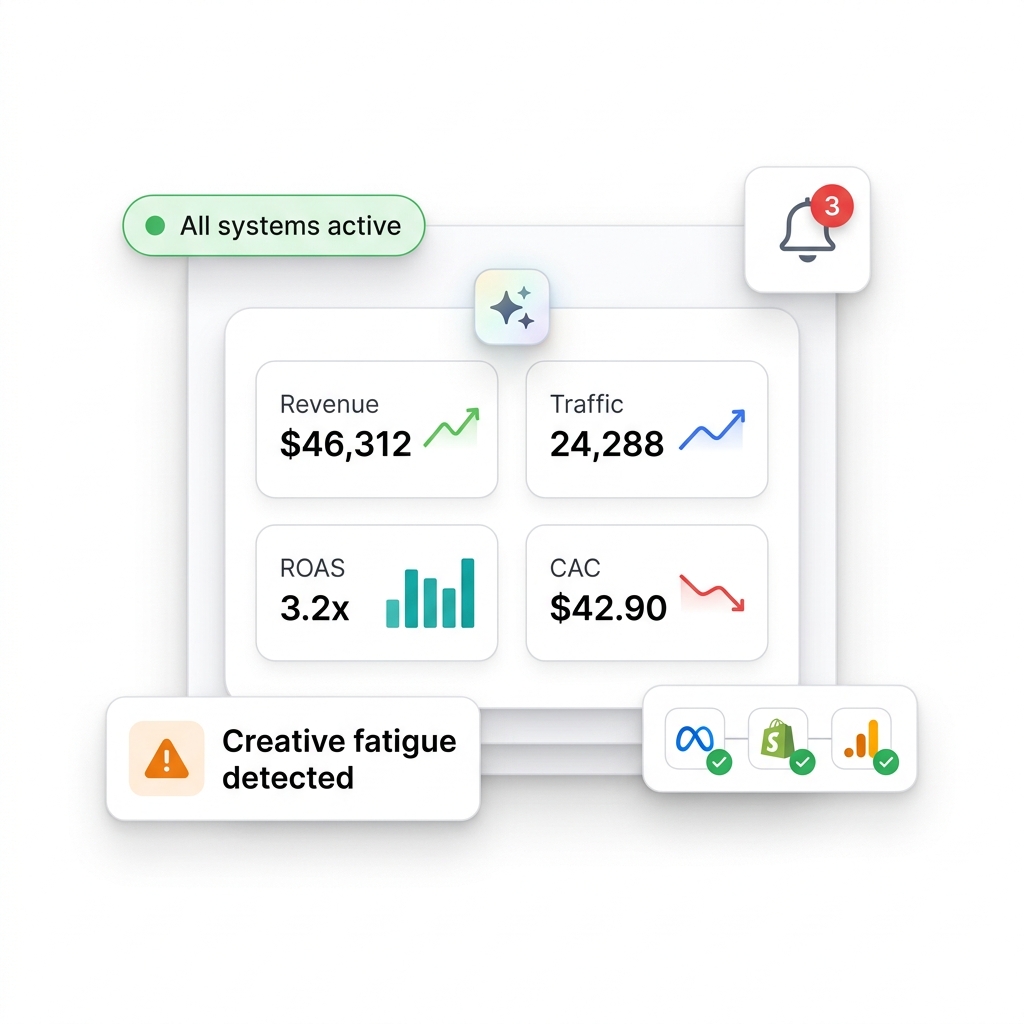
If your team lives in attribution dashboards and needs granular pixel-level data to justify spend across a large paid media budget, Triple Whale is a better analytics tool. If you need analytics that are good enough and execution tools that act on them, Ultima is the stronger choice.
Integrations & Ecosystem
Triple Whale has built an impressive integration ecosystem. 40+ platform connections including Meta, Google, TikTok, Klaviyo, Gorgias, Northbeam, and more. For brands that want a central hub aggregating data from across their entire tech stack, Triple Whale has invested heavily in making those connections reliable and accurate.
Ultima integrates with the major paid channels (Meta, Google, TikTok), Shopify, and Klaviyo, with the philosophy that the integrations you need most are covered natively and the execution tools you previously needed third-party software for are built in. The trade-off is clear: Triple Whale has more integration breadth for data aggregation; Ultima has more execution depth within its core stack.
Pricing & Value
Triple Whale pricing runs from $129/month for basic dashboards to $279/month for the Growth plan with full attribution features. Enterprise pricing is custom. These prices are for the analytics layer only, you'll still need to budget for creative production, a landing page tool, SEO software, and the team or agency time to act on what Triple Whale shows you.
Ultima is priced as a full-stack growth platform. The value comparison isn't just Ultima vs. Triple Whale's subscription cost, it's Ultima vs, the combined cost of Triple Whale + a creative agency + a landing page tool + an SEO vendor. Daniel F, at Just Ride LA went from $8,000/month in total marketing spend to $500/month after consolidating onto Ultima. That's the kind of stack compression that changes the unit economics for a growing DTC brand.
Why Brands Switch to Ultima
Most DTC brands don't leave analytics tools because the data is bad. They leave because data without action creates a different kind of problem: you know exactly what's wrong and still can't move fast enough to fix it. Brands switch to Ultima when they hit the ceiling of what a dashboard alone can do, when the bottleneck isn't information, it's execution bandwidth.
That pattern shows up across Ultima's customer base. Tim M, at Martin & Pleasance wasn't short on data, he was short on creative output capacity. Daniel F, at Just Ride LA understood his paid media metrics but couldn't justify the agency costs required to act on them. Hieu N, at Jade Jewelers knew her landing pages needed work but lacked the tools to iterate quickly. Ultima addressed each of those constraints not by providing better reports, but by building the execution layer directly into the platform.
Choose Triple Whale If...
- You're spending $20K+/month on paid media and need best-in-class multi-touch attribution to justify and allocate that budget accurately
- You have an in-house creative team or agency that handles ad production, landing pages, and content, and you just need better data to direct their work
- Attribution accuracy is your primary bottleneck, you're losing confidence in Meta's native reporting and need a reliable first-party data layer
- You want deep integrations across a large existing tech stack and need a data hub that connects Klaviyo, Gorgias, and 40+ other tools
Choose Ultima If...
- You're a lean DTC team without dedicated creative, SEO, or conversion rate optimization resources and need execution tools, not just reports
- You want to reduce CAC over time by building organic acquisition alongside paid. Ultima's SEO Autopilot handles this without additional headcount
- You're spending too much on your agency stack and want to consolidate creative production, landing pages, analytics, and content into one platform
- You need to move faster, from insight to live ad, from data gap to published content, without routing every decision through a separate tool or vendor
Frequently Asked Questions
Is Ultima a replacement for Triple Whale?
For most growing DTC brands, yes. Ultima covers analytics, attribution, and the full execution layer that Triple Whale doesn't touch. However, if you're a high-spend brand that needs the deepest possible paid media attribution fidelity, some teams run both. Ultima is a replacement for the combined stack of Triple Whale plus your separate execution tools.
How much does Ultima cost compared to Triple Whale?
Triple Whale runs $129–$279/month for analytics dashboards. Ultima is priced as a full-stack platform, the relevant comparison isn't the two subscription fees side by side, but Ultima vs. Triple Whale plus your creative agency, landing page tool, and SEO vendor combined. Daniel F, at Just Ride LA reduced total marketing spend from $8K to $500/month using Ultima.
What types of brands use Ultima?
Ultima is built for DTC ecommerce brands on Shopify, typically doing $500K to $50M+ in annual revenue. Customers include health and wellness brands like Martin & Pleasance, specialty retailers like Jade Jewelers, and lifestyle brands like Just Ride LA, teams that want to grow without proportionally scaling their agency or headcount costs.
Can I use Ultima alongside Triple Whale?
Yes. Some brands use Ultima for execution, creative generation, landing pages, and SEO, while maintaining Triple Whale for deep paid media attribution dashboards. That said, Ultima's analytics layer is comprehensive enough that most brands find they can consolidate and reduce overall tool costs significantly.
How quickly can I get started with Ultima?
Most brands are up and running within a few days of onboarding. The platform connects to your Shopify store and ad accounts quickly, and the personalized demo process means your team sees the platform configured around your actual brand data before you commit.
Does Ultima integrate with Shopify?
Yes. Ultima has a native Shopify integration that syncs your product catalog, order data, and conversion events in real time. Landing pages are built directly against your Shopify catalog, and performance data flows back into the analytics command center automatically.
What kind of results can I expect?
Results vary by brand and starting point, but customers have seen 80% reductions in creative production time (Martin & Pleasance), doubled landing page conversion rates (Jade Jewelers), and dramatic reductions in total marketing spend (Just Ride LA). The impact is typically largest for brands replacing fragmented agency relationships with Ultima's integrated execution layer.
Is there a free trial?
No. Ultima does not offer a free trial. Instead, we offer personalized live demos where our team walks you through the platform using your actual brand data. Book a demo to see it in action.
The Bottom Line
If you're a high-spend paid media brand with a creative team in place and your primary bottleneck is attribution clarity, knowing which of your ads, channels, and campaigns are truly driving revenue. Triple Whale is an excellent tool and worth the investment.
If you're a DTC brand that needs more than a dashboard, that needs to generate the ads, build the landing pages, publish the SEO content, and close the loop between data and growth. Ultima is the better choice. It's not just about what you can see; it's about what you can do.
The brands that grow fastest aren't the ones with the best reports. They're the ones that can act on data the fastest. That's what Ultima is built for.
Ready to see how Ultima works with your brand's actual data? Book a personalized demo and we'll walk you through the platform, no generic tour, no sales script.