Ultima vs Traditional Agency
Ultima vs Marketing Agency: Why AI-Powered Growth Wins
Ultima vs Traditional Agency
| Feature | Ultima | Traditional Agency |
|---|---|---|
| Pricing | $299/mo flat, all features included, no hidden fees | $5,000–$15,000/mo retainer, often with setup fees and ad spend markups |
| Time to Launch | Campaigns live in hours using AI-generated briefs and templates | Typically 4–8 weeks for onboarding, strategy, creative approvals, and launch |
| Ad Creative Generation | Generate hundreds of on-brand ad variations in minutes using AI | A handful of static or video creatives per month, requiring multiple revision rounds |
| Landing Page Builder | AI-assisted drag-and-drop builder with conversion-optimized templates, Shopify-native | Custom landing pages built by designers; slow turnaround, limited iteration speed |
| SEO & Content | SEO Autopilot generates and publishes optimized blog content on a recurring schedule | SEO content strategy and copywriting handled manually; monthly deliverables at extra cost |
| Analytics & Attribution | Real-time unified dashboard with cross-channel attribution, ROAS, CAC, and LTV tracking | Monthly or weekly reports compiled manually; limited real-time visibility into performance |
| Optimization Cadence | AI monitors and iterates campaigns 24/7, no human bottleneck | Optimizations made by account managers, typically reviewed weekly or bi-weekly |
| Contract Flexibility | Month-to-month, cancel anytime, no lock-in | 6–12 month minimum contracts standard; early termination fees common |
| Integrations & Ecosystem | Native Shopify integration; connects Meta, Google, TikTok, email, and more | Integrations vary by agency; often siloed across tools with manual data consolidation |
| Creative Volume | Unlimited creative variations per month, test at scale across audiences and angles | Creative volume capped by team bandwidth; scaling requires additional budget |
| Transparency & Reporting | Live dashboard, you own your data and see performance in real time | Reporting varies widely; some agencies provide dashboards, many send PDFs monthly |
| AI Capabilities | Purpose-built AI for DTC: creative generation, SEO, landing page optimization, and ad strategy | Some agencies use AI tools internally, but outputs are still human-bottlenecked and billed at agency rates |
Our Verdict
For DTC brands that need to move fast, test aggressively, and keep margins healthy, **Ultima** delivers what agencies simply can't match at $299/mo: real-time AI optimization, unlimited creative output, and full transparency, all without a six-month contract. The core differentiator isn't just cost; it's **speed of iteration**. Ultima's AI runs experiments continuously, while even the best agency is constrained by human bandwidth and monthly reporting cycles. Best for the growth-focused DTC operator who needs agency-level output without agency-level overhead.
Introduction
You're spending real money, or considering spending it, and you need to know whether a traditional marketing agency or an AI-powered platform like Ultima will actually move the needle for your brand. The ultima vs marketing agency debate isn't abstract: it's a decision about where your next $5,000, $10,000, or $15,000 goes, and whether you'll see results in weeks or quarters. This comparison will help you make that call clearly.
A Note on Transparency
We'll be upfront, we built Ultima, so we have a perspective. But we'll give you an honest comparison so you can decide for yourself. Where agencies genuinely outperform a software platform, we'll say so. The goal here is to help you find the right fit for your brand, not just to win a conversion.
What Is a Traditional Marketing Agency?
A traditional marketing agency brings together strategists, designers, copywriters, media buyers, and account managers under one roof, or one retainer. For brands that need high-touch creative direction, sophisticated brand positioning, or campaigns that require nuanced human judgment (think: a major rebrand, a six-figure video production, or a PR-integrated product launch), a seasoned agency can be genuinely valuable.
Agencies typically offer a full suite of services: paid social and search management, creative production, email strategy, SEO, and analytics. The best ones develop deep expertise in specific verticals and bring that institutional knowledge to every campaign they run. They also provide a human relationship, someone who knows your brand, understands the nuance of your customer, and can advocate for your vision in a room of creative directors.
The tradeoff is well-known: cost, speed, and control. Retainers typically run $5,000–$15,000/month before ad spend, contracts often lock you in for 6–12 months, and campaign launches routinely take 4–8 weeks from kickoff to live. For a DTC brand testing new channels or trying to iterate quickly, that pace can be a real obstacle.
What Is Ultima?
Ultima is an AI-powered growth platform built specifically for direct-to-consumer ecommerce brands. Rather than replacing human strategy entirely, it compresses the execution layer, the part that usually costs the most time and money, into a system that runs continuously without a retainer.
The platform includes a landing page builder with conversion-optimized templates and native Shopify integration, an ad creative generator that produces hundreds of on-brand variations in minutes, an SEO Autopilot that publishes optimized content on a recurring schedule, and an analytics command center that tracks ROAS, CAC, and LTV in real time across channels. Everything is connected, so the data that informs your ads also informs your landing pages and content strategy.
Real DTC brands are already using it at scale. Tim M at Martin & Pleasance saw an 80% reduction in creative production time after switching to Ultima. Hieu N at Jade Jewelers doubled landing page conversion rates using Ultima's AI-optimized page builder. Daniel F at Just Ride LA cut his monthly marketing spend from $8,000 to $500 while maintaining growth. These aren't edge cases, they reflect what happens when brands stop paying for agency overhead and start paying for outputs.
Head-to-Head Comparison
Landing Pages & Storefront
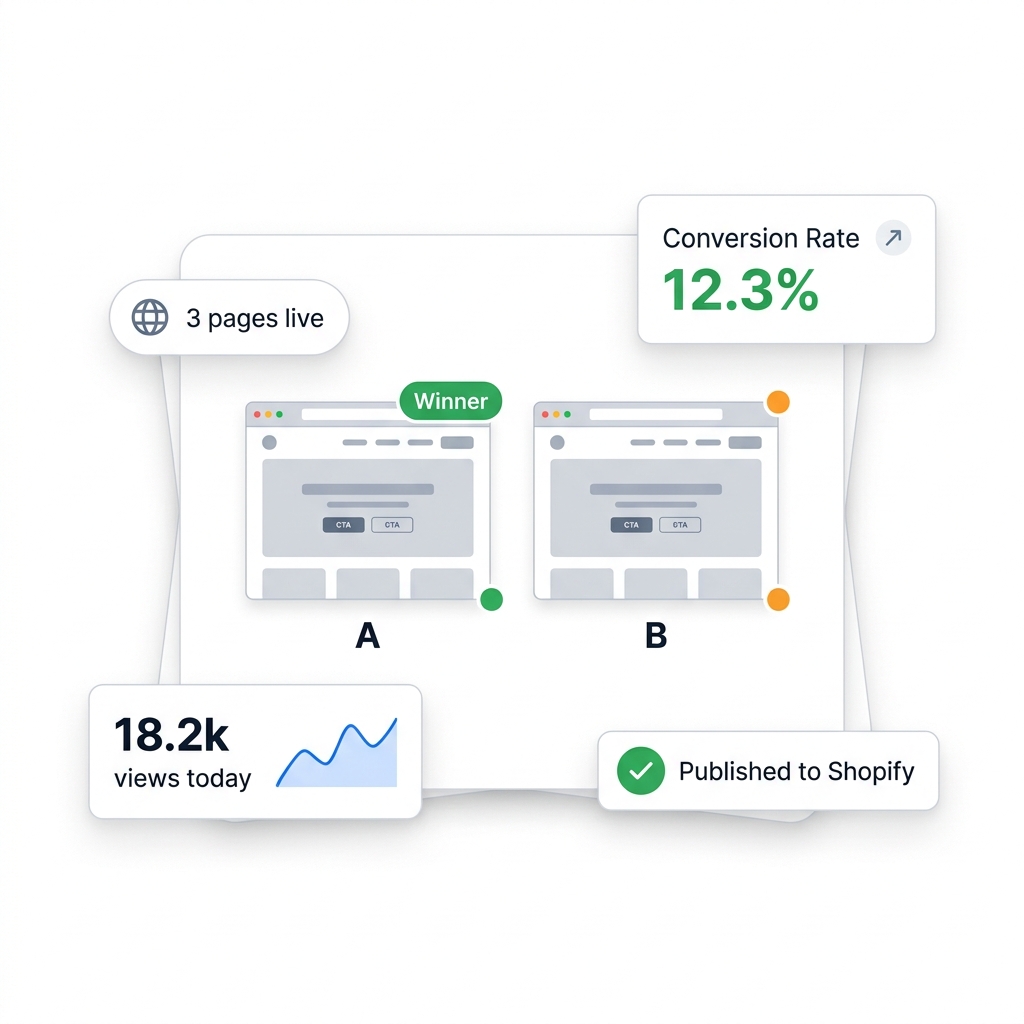
Ultima's landing page builder is designed for speed and conversion. Choose from a library of DTC-optimized templates, customize with a drag-and-drop editor, and push directly to your Shopify storefront, no developer required. The AI layer suggests layout changes, headline variations, and CTA copy based on conversion data, so your pages improve over time without manual A/B testing management.
Agencies can build beautiful, highly customized landing pages, but the turnaround is rarely fast. Expect 2–4 weeks for a single page after briefing, revisions, and approvals. More importantly, ongoing iteration is expensive: every new variant or test requires another round of design and development hours billed against your retainer.
For brands that need to test multiple offers, audiences, or angles simultaneously, which is most DTC brands running performance ads. Ultima's approach wins on volume and velocity. Where agencies shine is in deeply branded, one-time campaign pages that require original art direction and copy craft.
Ad Creative Generation
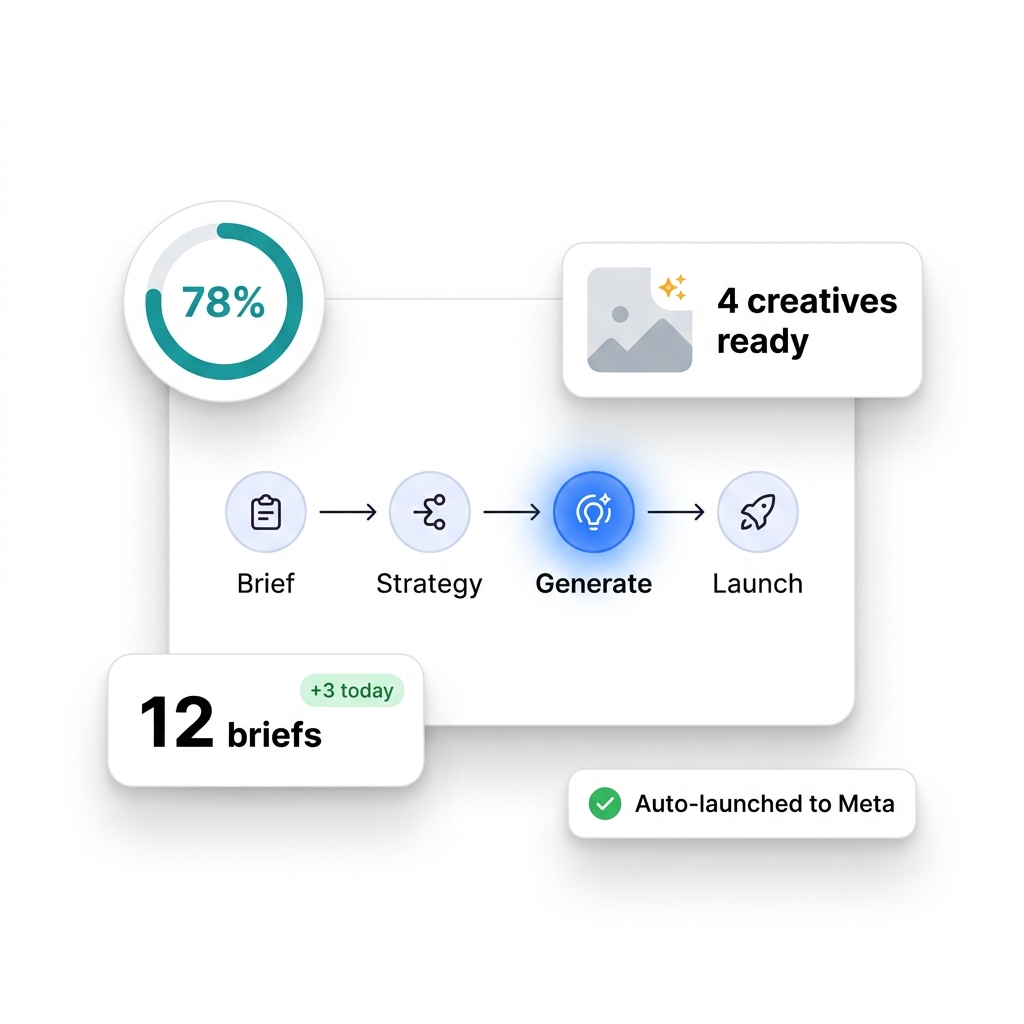
Creative testing is the lifeblood of paid social performance, and volume is leverage. Ultima's AI ad creative generator can produce hundreds of on-brand variations, across formats, copy angles, and audience hooks, in the time it takes an agency designer to finish one brief. That means more hypotheses tested, more winning creatives found, and faster ROAS improvement.
Traditional agencies typically deliver a set number of creative assets per month as part of your retainer, often 5–20 static ads or 2–4 video concepts. Scaling creative volume means scaling your budget. And each iteration requires another briefing, another design round, another approval. The process is thorough but slow.
Tim M at Martin & Pleasance experienced this shift directly, cutting creative production time by 80% after moving to Ultima. When you can test 50 variants in the time it used to take to produce 5, the performance compounding effect is significant.
SEO & Content
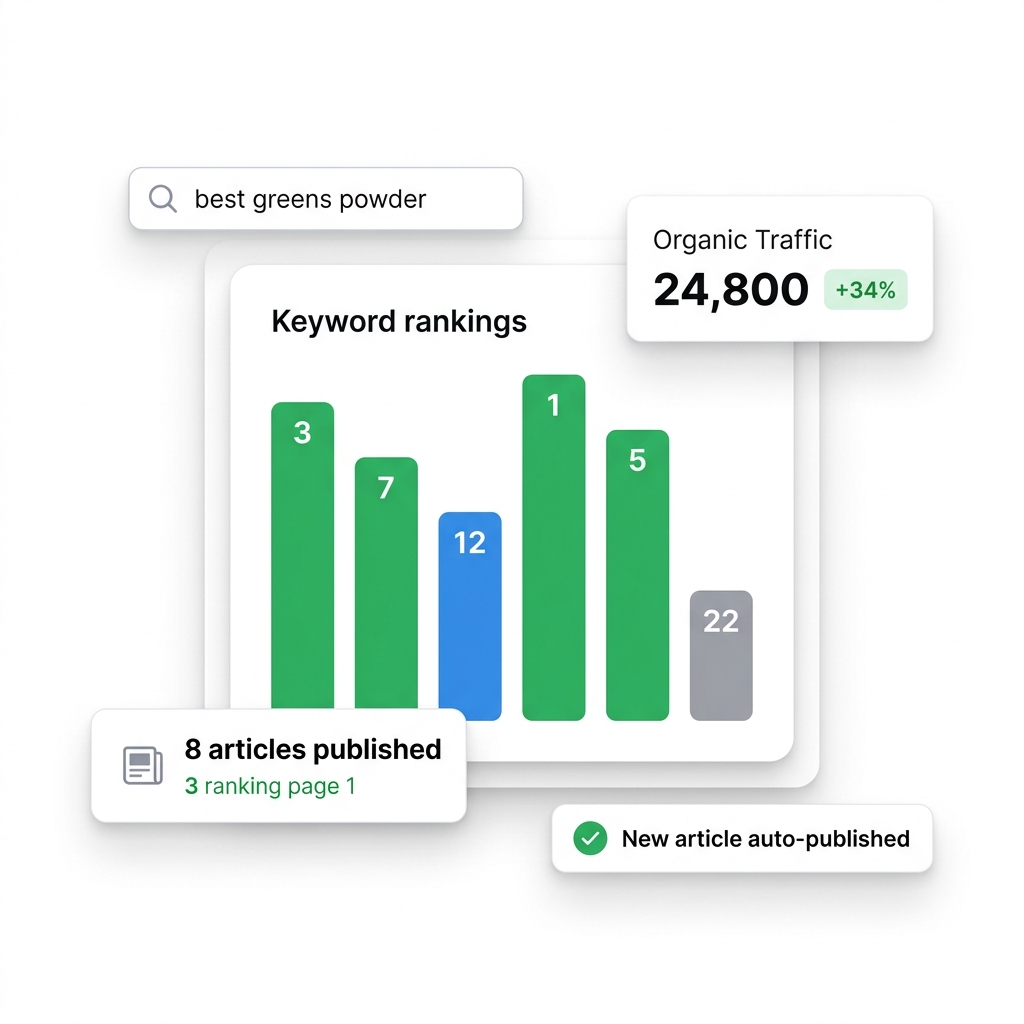
Ultima's SEO Autopilot takes the recurring execution work off your plate entirely. The platform identifies keyword opportunities, generates optimized blog content aligned to your product catalog, and publishes on a schedule, building organic traffic compounding over time without requiring a content manager or agency retainer.
Agencies typically offer SEO as a separate service line, often at an additional monthly cost on top of your base retainer. You'll get keyword research, on-page optimization recommendations, and a set number of content pieces per month, all executed by humans, which means quality can be high but the pace is fixed and the cost scales linearly.
For brands investing seriously in organic search, a specialist SEO agency with deep technical expertise may still outperform an automated solution on complex, competitive terms. But for most DTC brands that simply need consistent, quality content to build authority, Ultima's Autopilot removes the bottleneck without adding headcount.
Analytics & Attribution
Real-time visibility into what's working is non-negotiable for performance marketing. Ultima's analytics command center gives you a unified view of ROAS, CAC, LTV, and conversion data across Meta, Google, TikTok, and email, updated continuously, not compiled into a PDF once a month.
The agency reporting experience varies widely. Some larger agencies provide live Looker Studio or Data Studio dashboards. Many still send weekly or monthly reports compiled by an analyst. In either case, you're dependent on the agency's interpretation of your data, and if you want to drill into something specific, you're waiting for a response on Slack or email.
For the hands-on DTC operator, data ownership and real-time access changes how you make decisions. When you can see that a creative variant is outperforming at 2x ROAS at 9am, you can reallocate budget before lunch, not at next week's check-in call.
Integrations & Ecosystem
Ultima is built around the Shopify ecosystem, with native integration that connects your store data directly to ad performance, landing page behavior, and content outputs. It also connects to Meta, Google, TikTok, and major email platforms, giving you a consolidated view across every growth channel.
Agencies work across many client stacks and are generally tool-agnostic, which has advantages, they bring cross-brand experience and can recommend best-in-class tools for your situation. The downside is that data rarely flows seamlessly between those tools, and your agency team often becomes the manual connective tissue between platforms.
If your tech stack is Shopify-first, which describes the majority of DTC brands. Ultima's native integration is a meaningful advantage in both setup speed and data fidelity.
Pricing & Value
This is where the ultima vs marketing agency comparison becomes most stark. Ultima is $299/month, with all features included, no long-term contract, and no percentage-of-spend markup. You can cancel anytime.
A traditional agency retainer starts at $5,000/month for small-to-mid-market DTC brands and commonly runs $10,000–$15,000/month for brands with meaningful ad budgets. Most agencies also charge a percentage of managed ad spend (typically 10–15%), meaning your agency bill grows as your campaigns scale. Add a standard 6–12 month contract minimum, and you're committing $60,000–$180,000 annually before a single ad goes live.
Daniel F at Just Ride LA made this math work in his favor, cutting from $8,000/month to $500/month after switching to Ultima, while maintaining his growth trajectory. For lean DTC operators, the cost differential alone often justifies the switch.
Why Brands Switch to Ultima
The pattern we see most often is a brand that's been with an agency for 6–18 months. Early results were strong, the agency built a solid foundation, launched key channels, and established a baseline. But over time, the pace of iteration slows, the reporting feels increasingly opaque, and the monthly invoice stops feeling justified against the actual outputs delivered.
What Ultima offers those brands is continuity of execution without the overhead. The AI doesn't need onboarding time, doesn't have competing client priorities, and doesn't take two weeks off in August. Hieu N at Jade Jewelers doubled landing page conversion rates not by hiring more creative talent, but by removing the bottleneck between a good idea and a live test. That's the core value proposition: agency-level ambition, startup-level agility.
Choose a Traditional Marketing Agency If...
- You're launching a new brand from scratch and need strategic positioning, naming, and brand identity developed by experienced creatives
- You're running a high-budget campaign (six figures+) that requires original video production, influencer coordination, or integrated PR
- You need a dedicated human account team that can represent your brand in agency partner relationships, negotiate media buys, or manage complex campaign ecosystems
- Your category is highly regulated (healthcare, finance, legal) and requires compliance review at every creative touchpoint
Choose Ultima If...
- You're a DTC brand on Shopify that needs to launch and iterate fast without a long agency onboarding process
- You're spending $500–$10,000/month on paid media and want to maximize ROAS without paying agency percentage-of-spend markups
- You need creative volume. 50+ ad variants a month, to properly test audiences, hooks, and formats at scale
- You want full visibility into your marketing performance in real time, not a monthly PDF with someone else's interpretation of your data
Frequently Asked Questions
Is Ultima a replacement for a marketing agency?
For most DTC brands, Ultima replaces the execution functions of an agency, creative production, landing pages, SEO, and campaign optimization, at a fraction of the cost. If you need high-level brand strategy, original video production, or integrated PR, a specialist agency may still be valuable alongside Ultima.
How much does Ultima cost compared to a marketing agency?
Ultima is $299/month, all-inclusive, with no contract. Traditional marketing agencies typically charge $5,000–$15,000/month on retainer, often with additional percentage-of-ad-spend fees and 6–12 month contract minimums. The annual cost difference can exceed $150,000 for mid-market brands.
What types of brands use Ultima?
Ultima is purpose-built for direct-to-consumer ecommerce brands on Shopify. Customers include health and wellness brands like Martin & Pleasance, jewelry retailers like Jade Jewelers, and specialty retail brands like Just Ride LA. The platform works best for brands actively running paid media and looking to scale.
Can I use Ultima alongside a marketing agency?
Yes, many brands use Ultima for execution-layer work (creative generation, landing pages, SEO content) while retaining an agency for higher-level strategy or channel-specific expertise. The real-time analytics dashboard also makes agency performance easier to monitor independently.
How quickly can I get started with Ultima?
Most brands are live within a day of signing up. The Shopify integration connects in minutes, and the AI can begin generating creatives and landing pages immediately using your existing brand assets and product catalog. There's no lengthy onboarding or kick-off call required.
Does Ultima integrate with Shopify?
Yes. Shopify integration is native and central to how Ultima works. Your product catalog, store data, and conversion events connect directly, enabling accurate attribution and AI-powered optimization across every channel you run.
What kind of results can I expect?
Results vary by brand, but customers have reported an 80% reduction in creative production time (Martin & Pleasance), doubled landing page conversion rates (Jade Jewelers), and monthly marketing spend cut from $8,000 to $500 (Just Ride LA). The biggest gains typically come from creative volume and faster iteration cycles.
Is there a free trial?
No. Ultima does not offer a free trial. Instead, we offer personalized live demos where our team walks you through the platform using your actual brand data. Book a demo to see it in action.
The Bottom Line
If you need original brand strategy, high-production video creative, or a senior human team managing complex multi-channel campaigns at scale, a traditional marketing agency is the right call, and worth the investment.
If you need fast execution, unlimited creative output, real-time performance visibility, and the ability to iterate daily without a five-figure monthly retainer, Ultima is the better choice, and the ultima vs marketing agency math is hard to argue with at $299/month versus $5,000–$15,000/month.
The DTC brands winning right now aren't necessarily the ones with the biggest agency budgets. They're the ones moving fastest, testing most, and compounding learnings every week. Ultima is built for that.
Book a demo and see what your brand's growth looks like when the bottleneck is removed.